

District 3
Consist of Tiong Bahru, Redhill, Queenstown and Alexandra
Tiong Bahru & surroundings – places of interest
Tiong Bahru is a historic neighborhood in Singapore known for its pre-war architecture, charming coffee shops, and trendy boutiques. The area is home to many Art Deco-style buildings, which have been preserved and restored, giving the neighborhood a unique and charming character. Tiong Bahru is also known for its hawker centers, such as the Tiong Bahru Market and Food Centre which offers a variety of local street food. The Tiong Bahru estate, which was developed in the 1920s, is a notable feature of the neighborhood. It is considered one of the oldest public housing estates in Singapore, and it’s the first neighborhood that was planned and built by the Housing and Development Board. Tiong Bahru is also home to several independent bookstores, vintage clothing shops, and design studios, as well as a number of stylish cafes and restaurants. Some of them are located in restored shophouses, which gives a unique atmosphere to the neighborhood. The area is also home to the Tiong Bahru Park and Tiong Bahru playground, which are both popular spots for visitors and locals. Tiong Bahru is a great spot for visitors looking for a charming and relaxed atmosphere, as well as for those interested in experiencing Singapore’s rich history and culture.
TIONG BAHRU — OVERVIEW
Tiong Bahru is one of Singapore’s oldest residential neighborhoods and one of the few areas where heritage, creativity, and everyday local life coexist naturally. It has a calm, village-like atmosphere that contrasts with the nearby city center.
🕰️ HISTORY & URBAN DEVELOPMENT
- Developed in the 1920s–1930s
- Built by the Singapore Improvement Trust (SIT), the forerunner of the Housing & Development Board (HDB)
- Designed as a response to overcrowded inner-city housing
- Introduced modern living concepts such as:
- Proper sanitation
- Natural ventilation
- Shared courtyards and communal spaces
This makes Tiong Bahru a milestone in Singapore’s public housing history.
🧱 ARCHITECTURE & BUILT ENVIRONMENT
Art Deco Residential Blocks
- Curved corners and rounded balconies
- Streamlined forms and clean horizontal lines
- Central staircases and wide corridors
- Low-rise buildings (mostly 3–5 storeys)
- Buildings arranged around open courtyards
These features give the estate its distinctive, timeless character.
Shophouses & Restored Buildings
- Mix of residential and commercial use
- Many converted into:
- Cafés
- Boutiques
- Design studios
- Bookstores
- Retain original façades and five-foot ways
☕ CAFÉ & CREATIVE CULTURE
Tiong Bahru is known as one of Singapore’s creative and literary hubs.
Independent Bookstores
- Curated collections focusing on:
- Literature
- Design
- Local authors
- Often host:
- Book launches
- Readings
- Community events
Boutiques & Studios
- Vintage clothing shops
- Independent fashion labels
- Homeware and lifestyle stores
- Art and design studios
This gives the neighborhood a quietly artistic and intellectual vibe.
🍽️ FOOD CULTURE
Tiong Bahru Market & Food Centre
- One of Singapore’s most respected hawker centres
- Famous for:
- Traditional breakfast dishes
- Local desserts
- Classic Singaporean comfort food
- Popular with both locals and visitors
- Best visited in the morning or early afternoon
Cafés & Restaurants
- Stylish yet relaxed cafés
- Mix of:
- Western brunch spots
- Modern Asian dining
- Dessert cafés
- Many housed in conserved buildings, enhancing the experience
🌳 PARKS & OUTDOOR SPACES
Tiong Bahru Park
- Large, family-friendly park
- Jogging paths and open lawns
- Children’s playground inspired by train designs
- Connects the neighborhood to surrounding green corridors
Neighborhood Courtyards
- Small communal spaces between housing blocks
- Used for:
- Social gatherings
- Elderly activities
- Quiet relaxation
🏘️ SURROUNDING AREAS & NEARBY ATTRACTIONS
1. Alexandra & Redhill
- Older residential estates
- Traditional wet markets and coffee shops
- More local, everyday Singaporean life
2. Bukit Ho Swee
- Historically significant area
- Once a kampong settlement
- Represents Singapore’s urban transformation
3. River Valley (Short Walk / Drive)
- Modern residential area
- Riverside walks
- Cafés and lifestyle spots
4. Chinatown (Nearby)
- Cultural heritage district
- Temples, markets, and museums
- Complements Tiong Bahru’s quieter charm
5. Orchard Road (Short Drive)
- Main shopping belt
- Modern malls and entertainment
- Strong contrast to Tiong Bahru’s calm atmosphere
🚇 ACCESSIBILITY
- Served by Tiong Bahru MRT Station
- Excellent bus connections
- Walkable streets with flat terrain
- Easy access to CBD and central Singapore
🌅 BEST TIME TO VISIT
- Morning: Hawker breakfast and quiet walks
- Afternoon: Cafés, bookstores, boutiques
- Evening: Relaxed dining and neighborhood strolls
- Weekends: Lively but never overwhelming
📌 WHY VISIT TIONG BAHRU
Tiong Bahru is ideal for visitors who want:
- A slower, more local side of Singapore
- Heritage architecture without crowds
- Thoughtful cafés and creative spaces
- Authentic everyday life mixed with history
🚶♂️ TIONG BAHRU HALF-DAY WALKING ITINERARY (4–5 HOURS)
8:30–9:30 AM | Hawker Breakfast
Start: Tiong Bahru Market & Food Centre
- Explore one of Singapore’s most iconic hawker centres
- Enjoy classic local breakfast dishes and coffee
- Observe daily life as residents shop for fresh produce upstairs
Why start early: Best food options and cooler weather.
9:30–10:30 AM | Heritage Estate Walk
- Walk through the original Art Deco housing blocks
- Notice:
- Curved balconies
- Rounded stairwells
- Symmetrical layouts
- Explore quiet lanes and communal courtyards
- Experience the calm, village-like atmosphere
10:30–11:30 AM | Bookstores & Boutiques
- Visit independent bookstores
- Browse:
- Vintage clothing shops
- Lifestyle boutiques
- Design studios
- Take time to enjoy the slower pace and creative vibe
11:30 AM–12:30 PM | Café Brunch / Coffee Break
- Choose a café housed in a restored shophouse
- Relax with:
- Specialty coffee
- Brunch dishes
- Ideal time for people-watching and photography
12:30–1:30 PM | Park & Neighborhood Walk
- Head to Tiong Bahru Park
- Enjoy:
- Green spaces
- Jogging paths
- Playground area
- Optional walk towards Alexandra Road for a glimpse of older estates
Optional Extension (If You Have More Time)
- Walk to Redhill Market
- Continue to River Valley for riverside strolls
- Short ride to Chinatown for cultural exploration
⭐ WHO THIS ITINERARY IS FOR
- First-time visitors
- Café lovers
- Heritage enthusiasts
- Slow travelers
- Anyone wanting a non-touristy experience
📌 PRACTICAL TIPS
- Wear comfortable shoes
- Bring cash for hawker stalls
- Weekdays are quieter
- Weekends are lively but manageable
Redhill and surroundings – places of interest

Redhill is a residential neighborhood in Singapore, located in the central region of the island. The area is known for its public housing estates, which were developed by the Housing and Development Board (HDB) in the 1960s and 1970s. These housing estates are comprised of low-rise apartment buildings, which are popular among Singaporeans due to their proximity to the city center. Redhill is also home to several parks and green spaces, such as the Redhill Park and the Alexandra Canal Linear Park, which offer a variety of recreational activities for visitors and locals. The area is also home to the Redhill MRT station, which provides easy access to the rest of the city. Redhill is also home to several hawker centers, supermarkets and small shops, where you can find a variety of local street food and other products. Redhill is a great spot for visitors looking for a more affordable and authentic experience of Singapore’s residential life. It is not a touristy area, but it is a great spot to experience the everyday life of Singaporeans and the local culture.
REDHILL — OVERVIEW
Redhill is a quiet, lived-in residential neighborhood just minutes from Singapore’s city center. It represents everyday Singapore—practical, community-oriented, and deeply local. Unlike tourist districts, Redhill shows how most Singaporeans live, work, eat, and relax.
🕰️ HISTORY & URBAN DEVELOPMENT
- Developed mainly in the 1960s–1970s
- Part of Singapore’s early post-independence public housing expansion
- Built by the Housing & Development Board (HDB)
- Designed to house working families close to:
- Industrial areas
- City jobs
- Transport networks
Redhill reflects Singapore’s success in large-scale public housing and urban planning.
🏘️ HOUSING & COMMUNITY LIFE
HDB Estates
- Mostly low- to mid-rise apartment blocks
- Designed with:
- Open void decks
- Community spaces
- Nearby amenities (shops, clinics, schools)
- Strong neighborhood identity with long-time residents
Daily Life
- Morning markets and coffee shops are active
- Evenings are calm and family-oriented
- Strong sense of community and familiarity
🍽️ FOOD & LOCAL MARKETS
Redhill Market & Food Centre
- One of Singapore’s classic neighborhood hawker centres
- Popular for:
- Traditional breakfast dishes
- Local noodles and rice meals
- Desserts and kopi (coffee)
- Less touristy, very authentic
- Best visited early in the day
Coffee Shops & Small Eateries
- Located under HDB blocks
- Affordable and casual
- Frequented by residents rather than visitors
🌳 PARKS & GREEN SPACES
Redhill Park
- Neighborhood park with:
- Walking paths
- Exercise stations
- Open lawns
- Used mainly by residents for daily exercise
Alexandra Canal Linear Park
- Long green corridor following the canal
- Ideal for:
- Jogging
- Cycling
- Evening walks
- Connects Redhill to:
- Tiong Bahru
- Alexandra
- Queenstown
🚇 TRANSPORT & CONNECTIVITY
- Redhill MRT Station (East-West Line)
- Multiple bus routes
- 10–15 minutes to:
- Orchard Road
- CBD
- Chinatown
Despite its residential nature, Redhill is extremely well-connected.
🏙️ SURROUNDING ATTRACTIONS & NEIGHBORHOODS
1. Tiong Bahru (Nearby)
- Heritage estate with cafés and boutiques
- Art Deco architecture
- Hawker centre and creative culture
2. Alexandra & Queenstown
- Older housing estates
- Local wet markets
- Traditional coffee shops
3. Bukit Merah
- One of Singapore’s earliest residential towns
- Mix of old and new housing
- Industrial heritage
4. Henderson Waves & Southern Ridges (Short Ride)
- Elevated walkways and forest trails
- Panoramic city and harbor views
- Popular for nature lovers
5. River Valley (Short Drive)
- Riverside walking paths
- Cafés and modern residences
- Leisure and lifestyle area
🌅 BEST TIME TO VISIT
- Morning: Markets, breakfast, daily routines
- Late afternoon: Park walks and canal paths
- Evening: Quiet neighborhood atmosphere
📌 WHY VISIT REDHILL
Redhill is ideal for visitors who want:
- A genuine local experience
- Affordable food and everyday life
- Quiet, non-touristy neighborhoods
- Insight into Singapore’s public housing success
🧭 SUMMARY
Redhill is not about landmarks—it’s about lifestyle. It shows:
- How Singaporeans live day-to-day
- How neighborhoods are designed for community
- How green spaces are integrated into housing areas
🚶♀️ REDHILL LOCAL-LIFE MORNING WALK (3–4 HOURS)
8:00–9:00 AM | Market & Breakfast
Start: Redhill MRT Station
- Walk to Redhill Market & Food Centre
- Enjoy a traditional local breakfast:
- Coffee or tea at a kopi stall
- Simple noodle or rice dishes
- Observe:
- Seniors reading newspapers
- Residents shopping for fresh produce
Why this stop matters: Hawker centres are the heart of neighborhood life.
9:00–10:00 AM | HDB Estate Walk
- Walk through nearby HDB housing blocks
- Notice:
- Void decks used for seating and community activities
- Small neighborhood shops
- Bulletin boards with community notices
- Experience daily rhythms of a residential town
10:00–11:00 AM | Redhill Park
- Relax at Redhill Park
- Use walking paths or exercise stations
- Watch locals jogging or practicing tai chi
11:00 AM–12:00 PM | Alexandra Canal Linear Park
- Walk along the Alexandra Canal
- Enjoy greenery and open space
- Observe cyclists and families
- Connects naturally toward Tiong Bahru or Alexandra
Optional Extension (1–2 Hours)
- Walk toward Tiong Bahru
- Cafés and bookstores
- Continue to Queenstown
- Traditional wet markets and coffee shops
⭐ WHO THIS WALK IS FOR
- Visitors curious about real daily life
- Slow travelers
- Culture and urban-planning enthusiasts
- Photographers seeking non-touristy scenes
📌 PRACTICAL TIPS
- Wear comfortable shoes
- Bring small cash for hawker stalls
- Morning is best for atmosphere
- Weekdays are quieter than weekends
Queenstown & surrounding – places of interest
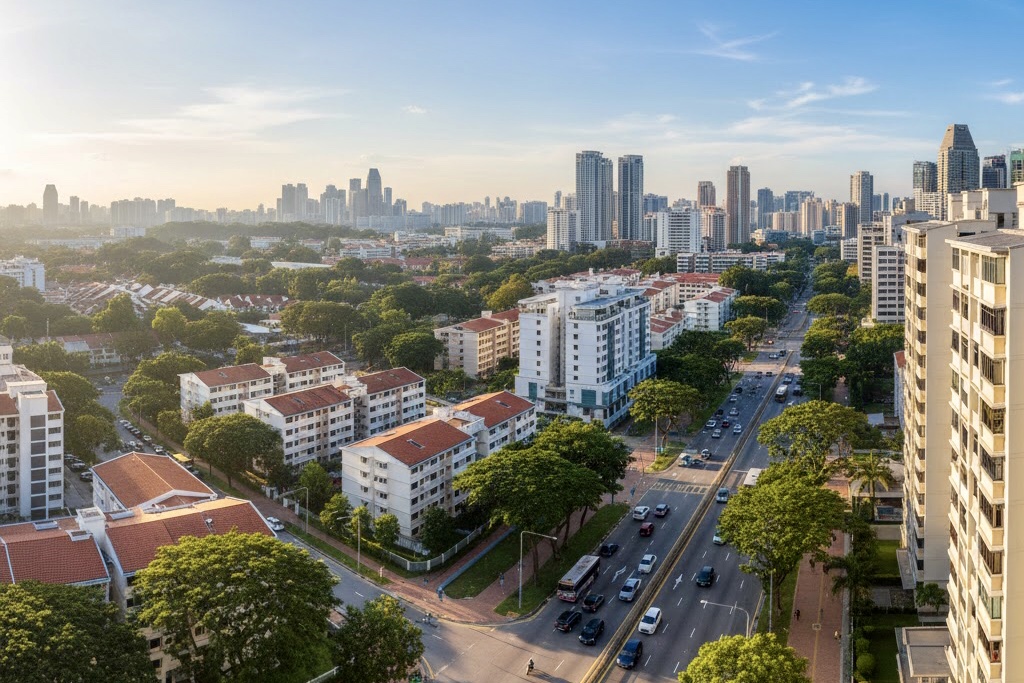
Queenstown is a residential neighborhood in Singapore, located in the central region of the island. It is considered one of the oldest housing estates in Singapore, developed by the Housing and Development Board (HDB) in the 1950s and 1960s. The area is known for its pre-fabricated apartment buildings and low-rise flats, which are popular among Singaporeans due to their proximity to the city center. Queenstown is also home to several parks and green spaces, such as the Queenstown Stadium and the Queenstown Heritage Walk, which offer a variety of recreational activities for visitors and locals. The area is also home to the Queenstown MRT station, which provides easy access to the rest of the city. Queenstown is also home to several hawker centers, supermarkets and small shops, where you can find a variety of local street food and other products. Queenstown is a great spot for visitors looking for a more affordable and authentic experience of Singapore’s residential life. It is not a touristy area, but it is a great spot to experience the everyday life of Singaporeans and the local culture.
QUEENSTOWN — OVERVIEW
Queenstown is Singapore’s first satellite town and one of the most historically significant public housing estates in the country. It represents the foundation of modern Singaporean urban living, blending early public housing, community life, and green planning.
🕰️ HISTORY & URBAN DEVELOPMENT
- Developed in the 1950s
- Originally planned by the Singapore Improvement Trust (SIT) before HDB took over
- Named to commemorate Queen Elizabeth II’s coronation
- Built to:
- Replace overcrowded kampongs
- Provide affordable housing close to industrial and city areas
Queenstown became a model for future HDB towns across Singapore.
🏘️ HOUSING & ARCHITECTURE
Early HDB & SIT Flats
- Pre-fabricated concrete blocks
- Simple, functional design
- Low- to mid-rise buildings
- Features:
- Wide corridors
- Open staircases
- Communal spaces
Iconic Residential Blocks
- Long, slab-like blocks
- Minimal ornamentation
- Emphasis on practicality and ventilation
These estates reflect Singapore’s post-war housing priorities.
🧑🤝🧑 COMMUNITY & DAILY LIFE
- Strong sense of neighborhood identity
- Long-time residents, many elderly
- Daily routines revolve around:
- Markets
- Coffee shops
- Parks
- Quiet evenings, active mornings
Queenstown feels lived-in and authentic, not curated for tourism.
🍽️ FOOD & MARKETS
Mei Ling Market & Food Centre
- One of Queenstown’s best-known hawker centres
- Popular for:
- Traditional local dishes
- Affordable meals
- Breakfast and lunch crowds
- Very local, few tourists
Neighborhood Coffee Shops
- Found under HDB blocks
- Casual dining
- Important social spaces for residents
🌳 PARKS & GREEN SPACES
Queenstown Stadium
- Sports facilities
- Running tracks
- Used by schools and local teams
Queenstown Heritage Walk
- Marked trail highlighting:
- Early housing developments
- Historical landmarks
- Community stories
- Good way to understand the town’s evolution
Alexandra Canal & Park Connectors
- Green corridors connecting Queenstown to:
- Redhill
- Tiong Bahru
- Alexandra
- Ideal for walking and cycling
🚇 TRANSPORT & ACCESSIBILITY
- Queenstown MRT Station (East-West Line)
- Extensive bus network
- 10–15 minutes to:
- Orchard Road
- CBD
- Buona Vista
Queenstown is centrally located yet residential.
🏙️ SURROUNDING AREAS & NEARBY ATTRACTIONS
1. Redhill
- Quiet residential estate
- Hawker centres and markets
- Local daily life
2. Tiong Bahru
- Art Deco heritage
- Cafés and boutiques
- Creative community
3. Alexandra
- Industrial heritage
- Canal parks
- Green corridors
4. Buona Vista
- Education and research hub
- Modern developments
- Shopping malls
5. Southern Ridges (Short Ride)
- Elevated forest walkways
- Scenic city and harbor views
- Nature escape near urban areas
🌅 BEST TIME TO VISIT
- Morning: Markets and daily routines
- Afternoon: Heritage walk and parks
- Evening: Quiet, residential atmosphere
📌 WHY VISIT QUEENSTOWN
Queenstown is ideal for visitors who want:
- Insight into Singapore’s housing history
- A non-touristy neighborhood
- Affordable local food
- A slower, more traditional atmosphere
🧭 SUMMARY
Queenstown is not flashy—it is foundational. It shows:
- How Singapore solved its housing crisis
- How communities were planned and sustained
- How green spaces integrate with daily life
🚶♂️ QUEENSTOWN HERITAGE WALK (4–5 HOURS)
8:30–9:30 AM | Hawker Breakfast
Start: Queenstown MRT Station
- Walk to Mei Ling Market & Food Centre
- Enjoy a traditional local breakfast
- Observe residents shopping, chatting, and reading newspapers
Why start here: Hawker centres are the heart of community life.
9:30–10:30 AM | Early Housing Estate Walk
- Walk through:
- Mei Ling Street
- Margaret Drive
- Notice:
- Early HDB and SIT flats
- Simple, functional designs
- Wide corridors and staircases
- Learn how housing evolved from kampongs to flats
10:30–11:30 AM | Queenstown Heritage Walk
- Follow marked heritage trail
- Learn about:
- Queenstown’s origins in the 1950s
- Social history of early residents
- Development milestones
- Understand why Queenstown became a model town
11:30 AM–12:30 PM | Parks & Recreation
- Visit Queenstown Stadium
- Walk along nearby park connectors
- Watch:
- Local sports practice
- Families and seniors exercising
12:30–1:30 PM | Lunch & Coffee
Choose one option:
🍜 Local
- Return to nearby coffee shops or hawker stalls
☕ Modern
- Short ride to Buona Vista for cafés and air-conditioned malls
Optional Extensions
- Walk to Alexandra Canal Linear Park
- Continue toward Redhill
- Short trip to Tiong Bahru
⭐ WHO THIS WALK IS FOR
- History and architecture enthusiasts
- Slow travelers
- Urban planning fans
- Visitors curious about everyday Singapore
📌 PRACTICAL TIPS
- Wear comfortable shoes
- Bring cash for hawker food
- Morning visits are best
- Weekdays are quieter
Alexandra & surrounding – places of interest

Alexandra is a neighborhood in Singapore, located in the central region of the island. The area is known for its industrial past, and it has undergone significant redevelopment in recent years. Alexandra is home to several places of interest, including Alexandra Canal Linear Park that offers a variety of recreational activities, such as jogging, cycling, and fishing. The park also features a playground and a fitness corner for visitors to enjoy. Another popular place to relax is the HortPark, which is Singapore’s first one-stop gardening and horticulture hub. The park features several themed gardens, such as the Palm Garden and the Fern Garden, as well as a number of educational exhibits and workshops. Also you have the Gillman Barracks which is a contemporary arts cluster in Singapore that is home to international art galleries, restaurants and the NTU Centre for Contemporary Art Singapore, which are all housed in conserved colonial barracks.
ALEXANDRA — OVERVIEW
Alexandra is a transitional district where industrial heritage, green corridors, and contemporary culture meet. Located between the city center and the southern region, it plays an important role in Singapore’s urban evolution—from warehouses and factories to lifestyle, arts, and green spaces.
🕰️ HISTORY & URBAN TRANSFORMATION
- Originally an industrial and military-support area
- Named after Queen Alexandra
- Served as:
- Warehouse zones
- Light industrial estates
- Military-related facilities
- Gradual redevelopment began in the late 20th century, focusing on:
- Adaptive reuse
- Green infrastructure
- Creative industries
Alexandra reflects Singapore’s ability to repurpose old spaces rather than erase them.
🌿 PARKS & GREEN SPACES
Alexandra Canal Linear Park
- Part of Singapore’s park connector network
- Follows a restored canal
- Features:
- Jogging and cycling paths
- Fishing decks
- Exercise stations
- Children’s playgrounds
- Connects:
- Redhill
- Queenstown
- Tiong Bahru
This park is a key example of Singapore’s water-sensitive urban design.
HortPark (read more..)

- Singapore’s first gardening and lifestyle horticulture hub
- Designed for:
- Home gardeners
- Urban farming enthusiasts
- Families and students
- Key features:
- Themed gardens (Palm Garden, Silver Garden, Fern Garden)
- Demonstration plots
- Educational workshops
- Also acts as a gateway to the Southern Ridges
🎨 ARTS, CULTURE & CREATIVE SPACES
Gillman Barracks (read more..)

- Former British military barracks
- Conserved colonial-era buildings
- Now houses:
- International art galleries
- NTU Centre for Contemporary Art
- Creative studios and cafés
- Hosts:
- Art exhibitions
- Talks and workshops
- Cultural events
Gillman Barracks is a key node in Singapore’s contemporary art scene.
🏙️ EVERYDAY LIFE & AMENITIES
Residential Areas
- Mix of:
- Older HDB estates
- Newer private developments
- Quiet, low-density environment compared to CBD
Food & Daily Amenities
- Neighborhood coffee shops
- Hawker centres nearby in:
- Redhill
- Queenstown
- Industrial canteens still operating in parts of Alexandra
🚇 TRANSPORT & ACCESSIBILITY
- Served by:
- Queenstown MRT
- Redhill MRT
- Labrador Park MRT (nearby)
- Well connected by bus routes
- Easy access to:
- Orchard Road
- CBD
- Southern Waterfront
🏙️ SURROUNDING AREAS & NEARBY ATTRACTIONS
1. Southern Ridges
- Elevated forest trails and bridges
- Panoramic views of the city and harbor
- Popular for nature lovers and hikers
2. Telok Blangah
- Older residential estates
- Markets and hawker centres
- Gateway to Mount Faber Park
3. Labrador Nature Reserve
- Coastal park with:
- Boardwalks
- WWII relics
- Sea views
- Quiet and scenic
4. Henderson & Bukit Merah
- Mature housing estates
- Local food and markets
- Everyday Singapore life
5. HarbourFront (Short Ride)
- Shopping malls
- Sentosa gateway
- Waterfront promenades
🌅 BEST TIME TO VISIT
- Morning: Canal walks and gardening activities
- Afternoon: Art galleries and HortPark
- Evening: Sunset walks along Southern Ridges
📌 WHY VISIT ALEXANDRA
Alexandra is ideal for visitors who enjoy:
- Green spaces integrated into the city
- Contemporary art and culture
- Quiet, non-touristy neighborhoods
- Understanding Singapore’s urban redevelopment
🧭 SUMMARY
Alexandra showcases:
- Adaptive reuse of industrial and military sites
- Strong emphasis on greenery and sustainability
- A balanced mix of lifestyle, arts, and nature
🌿🎨 ALEXANDRA HALF-DAY ITINERARY (4–5 HOURS)
8:30–9:30 AM | Alexandra Canal Linear Park Walk
Start: Queenstown or Redhill MRT
- Walk along the Alexandra Canal Linear Park
- Enjoy:
- Shaded paths
- Jogging and cycling lanes
- Fishing decks and greenery
- Observe locals exercising and commuting
Why start early: Cooler weather and peaceful atmosphere.
9:45–11:00 AM | HortPark Exploration
- Explore HortPark’s themed gardens
- Learn about:
- Tropical plants
- Urban gardening
- Sustainable landscaping
- Optional short break at a café within the park
11:15 AM–12:45 PM | Gillman Barracks
- Visit contemporary art galleries
- Explore conserved colonial buildings
- Learn about Singapore’s modern art scene
- Enjoy lunch or coffee at one of the restaurants
Optional Extension (If You Have Time)
- Continue to Southern Ridges for scenic views
- Visit Labrador Nature Reserve
- Short ride to HarbourFront or Sentosa
⭐ WHO THIS ITINERARY IS FOR
- Nature lovers
- Art and culture enthusiasts
- Slow travelers
- Visitors seeking quieter experiences
📌 PRACTICAL TIPS
- Wear comfortable walking shoes
- Bring water and sun protection
- Weekdays are quieter than weekends
- Check gallery opening hours before visiting


